Shortcuts to the project
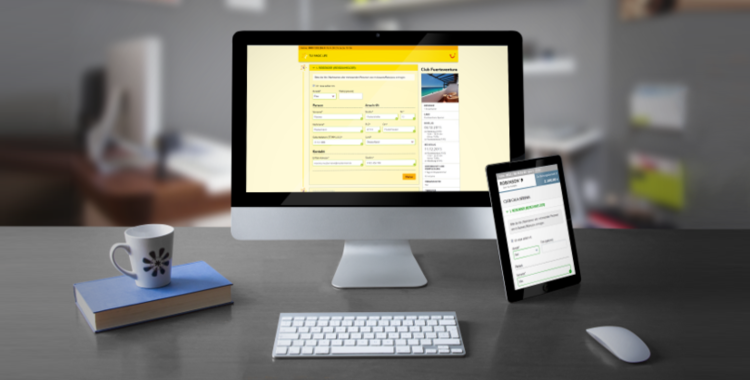
As part of the relaunch of the robinson.com and magiclife.com websites, we designed both booking pages with a simple and intuitive layout. Our project team developed the web application to be multi-client capable in both the frontend and backend. The goal: to make it easy to book additional services, such as travel insurance, and to create a robust software solution.
Advantages of multi-client capability
New clients are now only added by creating them in the database and designing an individual layout. This does not usually require extensive code changes. This function allows the booking pages for five clients to run on the same software and infrastructure, including robinson.com (Germany and Switzerland) and magiclife.com (Germany, Switzerland, and Austria).
Responsive design for improved usability
The booking pages created are intuitive for users to navigate and provide all the necessary information, as well as a wide range of options for creating a trip with individual components. Thanks to the responsive design, the pages are also easy to use for smartphone and tablet users.
Implementation in front-end and back-end
Agile methodologies such as SCRUM enabled us to engage in lively exchanges with the customer and quickly implement new features. Clean code principles ensure the quality of the software. This includes continuous integration testing by quality assurance.
By using the Foundation framework and based on TYPO3 CMS, responsive pages are generated when the booking pages of magiclife.com and robinson.com are called up, which are tailored to the size of the end device. We are a TYPO3 Association Member, which allows us to actively participate in the further development of the open content management system and tailor individual extensions optimally to the customer. In order to offer the customer a fast-responding interface, we took advantage of the modern JavaScript framework and created the booking pages as a one-page AngularJS application.
We implemented iAdvice's on-site communication tool in the front end to enable customers to receive individual advice from service center employees on the booking pages. This allows customers to clarify their questions in the chat or request help from service staff.
In order to continue optimizing the pages and advancing the booking process for individual clients, we use Google Tag Manager and Google Analytics. This allows initial findings to be implemented quickly via Optimizely based on results.
The booking system uses a Java backend on the WildFly Application Server, which integrates various REST and XML-based interfaces. The PHP front end communicates with the Java back end via a uniform SOAP interface, which transforms the requests and forwards them to external interfaces. A configuration database and a cache ensure fast and smooth responses, whereby the configuration data can be edited using a JSF tool or database scripts.
Get in touch now!