Shortcuts to the project
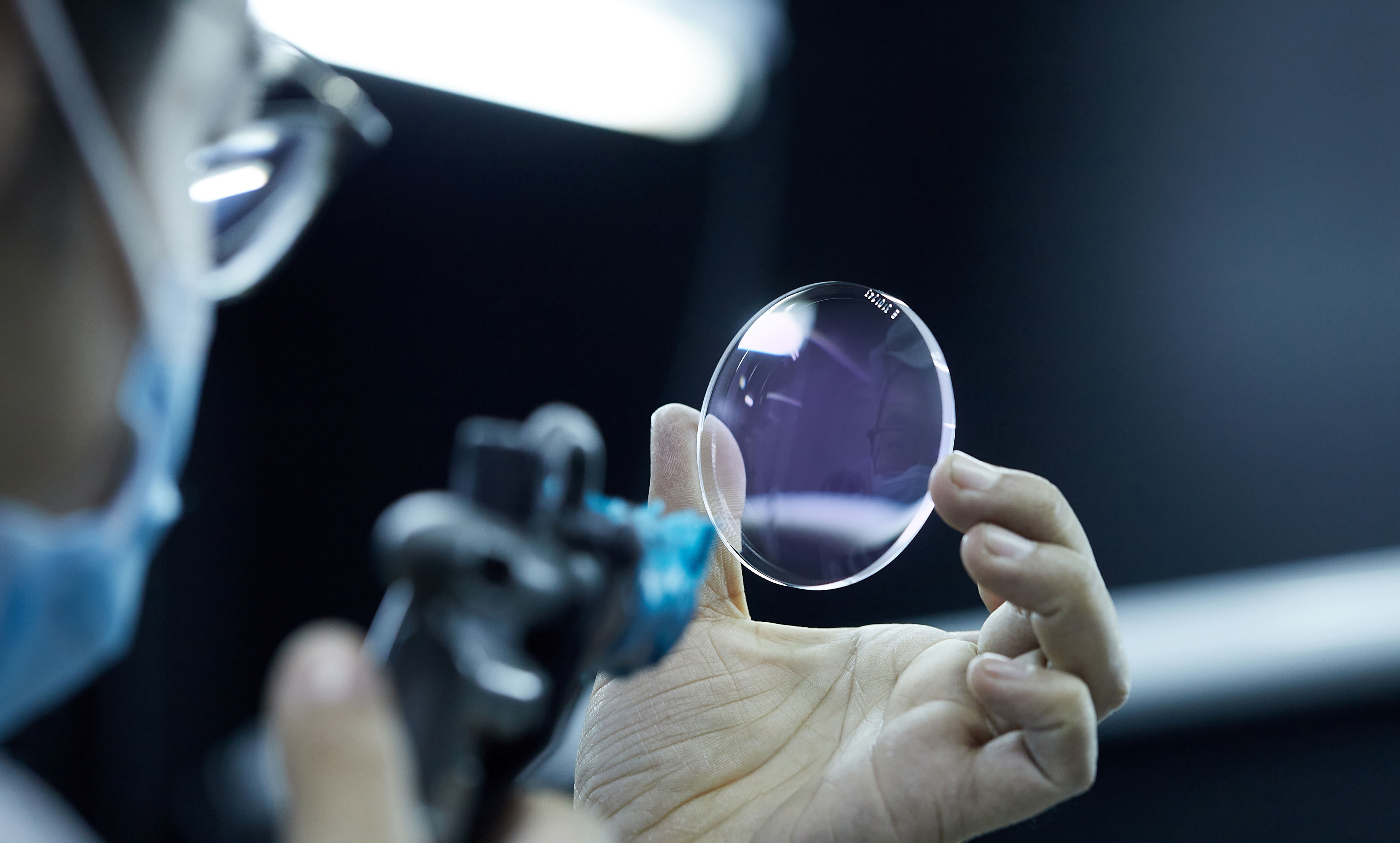
We worked on several projects for our customer in the precision engineering and optical industry. Their manufacturing machines require a high degree of precision in production and quality assurance. Our task was to develop customized software that enables machine control and integration into the customer's intranet, as well as ensuring process monitoring and evaluation. Our development teams implemented all projects according to Scrum in two-week sprints, with the product owners forming the interface to waterfall management.
Integration and quality assurance in manufacturing
One task was to develop customized software for their production or quality assurance machines and connect it to their intranet. Various challenges repeatedly arise in connection with the machines and the production database. A decisive factor in the complexity is the heterogeneity of the machines, which results from temporal deviations in hardware development and different manufacturers. This results in different functions and controls, which increase the difficulty of implementation for the same workflow. The result of our mission is a functioning software solution that enables machine control and intranet connection.
Efficient software development for production in the semiconductor industry
The customer manufactures components and systems for semiconductor production. These components are primarily optical elements that are assembled into modules and delivered to an external company that manufactures semiconductors. The optical elements consist of highly specialized components.
Our goal in this project was to develop various applications that perform processes, measurements, and evaluations. These applications partially control the machines that the customer manufactures itself, generate measured values, and/or evaluate them. The stable and high-performance applications are intended to contribute to the operation of production so that products can be delivered to customers on time and correctly.
We improved the software and code in terms of maintainability, extensibility, and error susceptibility by applying modern methods such as TDD and continuous integration. Since we developed and integrated the applications for production, we were able to gain a comprehensive understanding of the customer's processes, which will enable us to successfully carry out new projects with sufficient expertise in the future.
Automation of quality assurance evaluation through AI
The manufacture of assemblies for semiconductor production requires a high degree of accuracy. For this reason, the parts are checked and secured several times using various methods.
One method is optical inspection, in which a machine, such as an automated five-axis microscope, scans the parts and checks them for defects.
Since the parts are to be analyzed in the micrometer range, the optical measurement data must be very accurate. To this end, several partial images of the object are taken. To avoid taking an unnecessary number of images, the positions of the images must be planned during the measurement process. Once the object has been completely scanned, the partial images are stitched together and various statistical features are calculated. These are used to detect and classify defects using various AI methods. The defects are then evaluated based on defined specifications that define the permissible limits of a measurement.
Our services
Capture of image or measurement data
Route planning for the measuring head
Analysis of image or measurement data
Stitching and feature detection
Evaluation of image or measurement data
With AI methods
Monitoring for the production of assemblies
We developed customized monitoring software to control the systems on the one hand and to monitor production processes with a focus on the manufacture of assemblies on the other. We took particular care to implement the detailed level of representation of the assembly and the connection to the customer's highly customized intranet. It should be noted that the manufacturing process for each assembly is a manual one. Our implementation of the monitoring system made it possible for our customer to monitor the assembly process.
In order to check product quality and production progress, the customer needed to be able to see the following information on a screen: Which modules or parts thereof are currently in production? What are the measured values from the various production machines? How far has the production process progressed for each module?
Our project approach
- 1
Inventory of existing projects:
The existing WinForm applications for measurement data analysis are analyzed and documented.
- 2
Suggestions for improvement:
Opportunities for optimizing and modernizing IT processes are identified and presented, e.g., through the use of WPF applications or connection to various services.
- 3
Participation in the decision-making process:
A solution is selected together with the customer that meets their requirements and budget.
- 4
Solution design and cost plans:
A detailed plan for implementing the chosen solution is drawn up, covering the architecture, functions, interfaces, schedule, and costs.
- 5
Implementation of new applications and optimization of old applications:
The necessary steps are taken to develop, test, and implement the new or improved application and to adapt the database. Quality standards and customer satisfaction are ensured in the process.
Want to learn more?